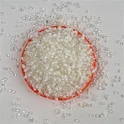
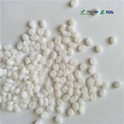
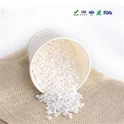
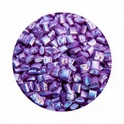
"Masterbatch" is a concentrated mixture of pigments, additives, or other functional components dispersed within a carrier resin. It is used in plastic manufacturing to efficiently impart specific properties such as color, UV resistance, flame retardancy, or antistatic effects to the final product. Here's a structured overview:
Components:
Carrier Resin: A polymer base compatible with the end product's plastic, ensuring even dispersion.
Additives/Pigments: High concentrations of dyes, fillers (e.g., calcium carbonate), or performanceenhancing additives.
Types:
1. Color Masterbatch: For consistent coloring (e.g., black/white masterbatches for base shades).
2. Additive Masterbatch: Incorporates functional additives (UV stabilizers, antifog agents).
3. Filler Masterbatch: Reduces costs by adding inert materials while maintaining properties.
Production Process:
Dispersion: Pigments/additives are uniformly mixed into the carrier resin via extrusion.
Pelletizing: The mixture is cooled and cut into granules for easy handling.
Key Benefits:
Efficiency: Simplifies production by premixing components, reducing raw material handling.
Consistency: Ensures uniform dispersion, minimizing defects like speckling.
CostEffective: Lowers storage and processing costs compared to raw additives.
Versatility: Customizable for diverse applications (packaging, automotive, textiles).
Usage:
Mixed with base polymers at a letdown ratio (typically 1–5%) during molding/extrusion.
Requires compatibility between carrier resin and base polymer to avoid defects.
Applications:
Plastics for packaging, automotive parts, consumer goods, and 3D printing filaments.
Enhances aesthetic and functional properties in end products.
Challenges:
Compatibility issues between carrier resin and base polymer.
Costbenefit analysis for smallscale production.
In summary, masterbatch streamlines plastic manufacturing by delivering targeted properties efficiently, ensuring quality, and reducing operational complexity.