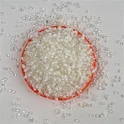
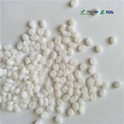
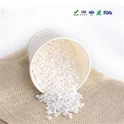
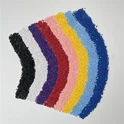
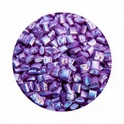
The following are the main differences between lightshielding masterbatches and ordinary masterbatches:
1. Core function
Lightshielding masterbatch:
With light blocking (especially visible light and ultraviolet light) as the core function, it reduces light transmission by adding high hiding materials (such as titanium dioxide, barium sulfate, calcium carbonate, etc.), and is often used in plastic products that need to be opaque or lightshielding (such as packaging, LED components, optical equipment, etc.).
Ordinary masterbatch:
Mainly provides color imparting function, has no special requirements for light transmittance, and may remain transparent, translucent or opaque, depending on the type of pigment (such as organic pigment, inorganic pigment) and the choice of carrier resin.
2. Ingredient difference
Lightshielding masterbatch:
High hiding filler: titanium dioxide (TiO₂, rutile type has the best effect), barium sulfate (BaSO₄), etc.
Carrier resin: Need to be compatible with the substrate (such as PP, PE, ABS, etc.).
Light stabilizers (such as UV absorbers) may be added to enhance lightshielding durability.
Ordinary masterbatch:
Pigments/dyes: Such as phthalocyanine blue, carbon black, iron oxide red, etc., used in small quantities.
Carrier resin: Select according to color requirements, fillers may not be required.
3. Optical properties
Lightshielding: The light transmittance of lightshielding masterbatch is usually <10% (even close to 0%), while ordinary masterbatch may be transparent or have a higher light transmittance.
Reflection/scattering: Lightshielding masterbatch scatters light through fillers, while ordinary masterbatch relies on the absorption of specific wavelengths by pigments.
4. Application scenarios
Lightshielding masterbatch:
Food packaging (antiultraviolet deterioration), LED lampshade (avoid halo), medical bottle (storage medicine in dark), automotive parts (reduce interior fading).
Ordinary masterbatch:
Daily plastic products (toys, home appliance housings), fiber dyeing, etc., no lightshielding requirements.
5. Processing and cost
Processing technology: Due to the high filler content, lightshielding masterbatch may increase melt viscosity and require adjustment of injection molding or extrusion parameters (such as temperature and pressure).
Cost: Lightshielding masterbatch is usually more expensive (due to the high cost of fillers such as titanium dioxide), while ordinary masterbatch is cheaper.
6. Other characteristics
Density: Lightshielding masterbatch contains inorganic fillers, so its density is usually higher than that of ordinary masterbatch.
Mechanical properties: Excessive lightshielding fillers may reduce the toughness of plastics, and it is necessary to balance lightshielding properties and material strength.
Summary of selection criteria:
Need complete lightproof or ultraviolet protection → Choose lightshielding masterbatch.
Only color is needed and no lighttransmittance is required → Ordinary masterbatch is sufficient.
In practical applications, the two may be used in combination (such as lightshielding masterbatch + color pigment) to achieve both functionality and aesthetics.