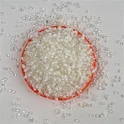
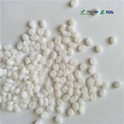
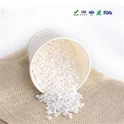
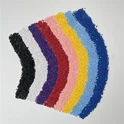
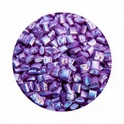
Vinyl chloride homopolymer and vinyl chloride copolymer are collectively referred to as vinyl chloride resin. The material is a non-crystalline material. In actual use, stabilizers, lubricants, auxiliary processing agents, colorants, impact resistance agents and other additives are often added to PVC materials. It has non-flammability, high strength, resistance to climate changes and excellent geometric stability. PVC has strong resistance to oxidants, reducing agents and strong acids. However, it can be corroded by concentrated oxidizing acids such as concentrated sulfuric acid and concentrated nitric acid and is not suitable for contact with aromatic hydrocarbons and chlorinated hydrocarbons.
Poly Vinyl Chloride, the main component of which is polyvinyl chloride, has bright colors, corrosion resistance, firmness and durability. Since some toxic auxiliary materials such as plasticizers and anti-aging agents are added in the manufacturing process to enhance its heat resistance, toughness, ductility, etc., its products generally do not store food and medicine. It is a popular and widely used synthetic material in the world today. Its global usage ranks second among various synthetic materials. According to statistics, in 1995 alone, the production of PVC in Europe was about 5 million tons, and its consumption was 5.3 million tons. In Germany, the production and consumption of PVC averaged 1.4 million tons. PVC is being produced and used worldwide at a growth rate of 4%. In recent years, the growth rate of PVC in Southeast Asia has been particularly significant, thanks to the urgent need for infrastructure construction in Southeast Asian countries. Among the materials that can produce three-dimensional surface films, PVC is the most suitable material. PVC (polyvinyl chloride), the structural formula of its monomer is CH2=CHCl. PVC material is extremely versatile, with good processing performance, low manufacturing cost, corrosion resistance, insulation and other good characteristics. It is mainly used to make: Preven PVC cards; PVC OEM; PVC wire; PVC curtains; PVC plastic-coated welded mesh; PVC foam boards, PVC ceilings, PVC water pipes, PVC skirting boards, as well as threading tubes, cable insulation, plastic doors and windows, plastic bags, etc. PVC products can be seen everywhere in our daily life. PVC is used to make various imitation leathers, used in luggage bags, sports products such as basketballs, footballs and rugby balls. It can also be used to make belts for uniforms and special protective equipment. The combustion characteristics of polyvinyl chloride are that it is difficult to burn, extinguishes immediately when away from the fire, the flame is yellow, white smoke, and the plastic becomes soft and emits a pungent smell of chlorine when burning.

Polyvinyl chloride resin is a multi-component plastic. Different additives can be added according to different uses. Therefore, its products can present different physical and mechanical properties with different compositions. For example, adding or not adding plasticizers can make it soft or hard. In general, PVC products have the advantages of chemical stability, flame self-extinguishing, wear resistance, sound and vibration reduction, high strength, good electrical insulation, low price, wide material source, and good air tightness. Its disadvantage is poor thermal stability and easy aging under the action of light, heat and oxygen. Polyvinyl chloride resin itself is non-toxic. If the products are made of auxiliary materials such as non-toxic plasticizers and stabilizers, they are harmless to humans and animals. However, most of the plasticizers and stabilizers used in polyvinyl chloride products generally seen on the market are toxic. Therefore, except for products with non-toxic formulas, they cannot be used to hold food.
Physical properties:
PVC resin is a thermoplastic plastic with an amorphous structure. Under ultraviolet light, hard PVC produces light blue or purple-white fluorescence, while soft PVC emits blue or blue-white fluorescence. The refractive index is 1.544 at 20°C, the specific gravity is 1.40, and the density of products with plasticizers and fillers is usually in the range of 1.15-2.00, the density of soft PVC foam is 0.08-0.48, and that of hard foam is 0.03-0.08. The water absorption rate of PVC is not more than 0.5%. The physical and mechanical properties of polyvinyl chloride depend on the molecular weight of the resin, the content of plasticizer and filler. The larger the molecular weight of the resin, the higher the mechanical properties, cold resistance and thermal stability, but the processing temperature is also required to be high, and molding is more difficult; low molecular weight is the opposite of the above. The tensile strength decreases with the increase of filler content. Chemical properties PVC has extremely good chemical stability and is extremely valuable as an anti-corrosion material. PVC is stable to most inorganic acids and alkalis. It does not dissolve when heated and decomposes to release hydrogen chloride. A brown, insoluble unsaturated product is obtained by azeotropy with potassium hydroxide. The solubility of PVC is related to the molecular weight and the polymerization method. Generally speaking, the solubility decreases with the increase of the molecular weight of the polymer, and the solubility of the emulsion resin is worse than that of the suspension resin. It can be dissolved in ketones (such as methyl hexyl ketone, cyclohexanone), aromatic solvents (such as toluene, xylene), dimethyl formyl, and tetrahydrofuran. At room temperature, polyvinyl chloride resin is almost insoluble in plasticizers, but it swells significantly at high temperatures and even dissolves. Processing properties PVC is an amorphous polymer with no obvious melting point. It is plastic when heated to 120-150°C. Due to its poor thermal stability, a small amount of HCl is released at this temperature, which promotes its further decomposition. Therefore, alkaline stabilizers and HCl must be added to inhibit its catalytic cracking reaction. Pure PVC is a hard product, and it is necessary to add an appropriate amount of plasticizer to make it soft. For different products, additives such as ultraviolet absorbers, fillers, lubricants, pigments, mildew inhibitors, etc. are also needed to improve the performance of PVC products. Like other plastics, the performance of the resin determines the quality of the product and the processing conditions. For PVC, the resin properties related to processing include: particle size, thermal stability, molecular weight, fish eyes, bulk density, purity and foreign impurities, and porosity. For PVC paste, the viscosity and gelling properties of the paste should be measured to facilitate the control of processing conditions and product quality.