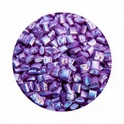
Masterbatch vs. Pigment Powder:
A Comprehensive Comparison of Advantages and Disadvantages
The choice between masterbatch and pigment powder ultimately comes down to a trade-off between cost, ease of use, environmental impact, and final product performance. To help you quickly understand the core differences, I have summarized their comparison below:
I. Basic Form
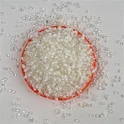
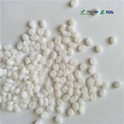
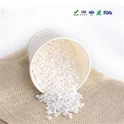
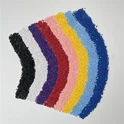
Masterbatch: Granular
Pigment Powder: Powder
II. Typical Application Scenarios
Masterbatch: Large-scale continuous production, film/fiber products, products requiring high color consistency, environmentally conscious factories
Pigment Powder: Small-batch, multi-variety production, thick-walled injection molded products, prototyping and R&D stages, scenarios where cost is extremely sensitive and pollution can be controlled.
III. Core Advantages and Disadvantages:
1. Pigment Powder (Dry Coloring) involves directly mixing pigment powder with plastic resin.
Advantages: Its biggest advantage is its low cost, as it eliminates the granulation process. It is also very suitable for flexible production of small batches and multiple colors, with relatively quick color matching and adjustment.
Disadvantages: Its problems are also significant: it generates serious dust pollution during production, affecting worker health and the workshop environment. The dispersion of the pigment in the plastic is poor, easily leading to uneven product color, color spots, or streaks, especially affecting thin products such as films and fibers. In addition, controlling color differences in each batch is more difficult, and heavily relies on the operator's experience.
2. Masterbatch is made by pre-dispersing a high proportion of pigment in a carrier resin to form granules.
Advantages: It essentially eliminates the dust problem. Because the pigment is pre-processed, its dispersion in the final product is better, resulting in more uniform and stable colors. When used, it is easy to measure and mix like raw material granules, making it very suitable for automated, large-scale continuous production.
Disadvantages: Its unit price is higher than pigment powder, and there is usually a minimum production batch requirement (e.g., several hundred kilograms). If the carrier used in the masterbatch is not compatible with the base resin of the product, it may affect the mechanical properties of the product or lead to poor dispersion.