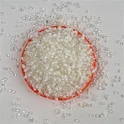
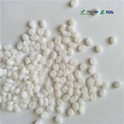
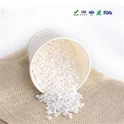
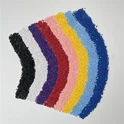
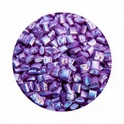
Color masterbatch is a new plastic and fiber coloring product developed in the 1960s. It is a polymer compound made by uniformly loading pigments in resins. The masterbatch is mainly composed of three parts: colorant, carrier and dispersant.
There are nearly 50 enterprises with an annual production capacity of more than 1,000 tons of color masterbatch in my country, and the national production capacity of color masterbatch is 300,000 tons per year. In 2001, the demand for color masterbatch in my country was less than 120,000 tons. Severe excess production capacity has led to the general underemployment of the domestic color masterbatch industry. In addition to factors such as excessive growth of new production equipment and insufficient product orders, the important factor is that domestic color masterbatch products have a single structure, incomplete varieties, and general-purpose products. The proportion is very large, while the proportion of high-concentration and ultra-high-concentration, multi-functional masterbatches and masterbatches for fine denier fibers is relatively small.
In contrast, countries with a high level of masterbatch technology have a complete range of raw materials such as pigments and dispersants, and have formed a serialized and specialized product structure. In terms of variety development, my country's masterbatch manufacturers have developed masterbatches for fibers, masterbatches for films, masterbatches for wires and cables, polyolefin masterbatches, PVC masterbatches, and color masterbatches for injection molding products.