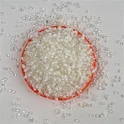
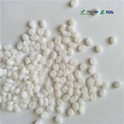
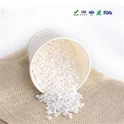
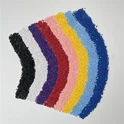
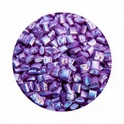
It acts like an "invisible anti-fog coating" for plastics.
Core Principle: From Water Droplets to Water Film
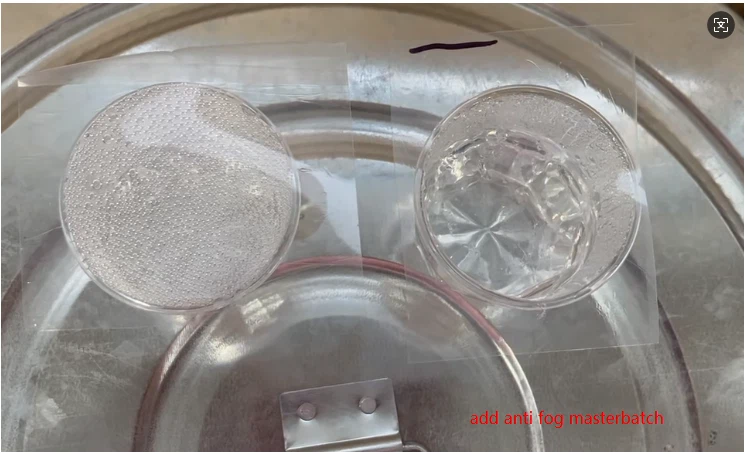
The key to anti-fog masterbatch's effectiveness lies in its ability to change the state of water on the plastic surface: Ordinary plastic film: The surface is hydrophobic (water-repellent). When warm, humid water vapor encounters the cooler film surface, it condenses into tiny water droplets. These droplets scatter light, causing the film to appear hazy and reducing its transparency.
After adding anti-fog masterbatch: The active ingredients in the masterbatch (mainly surfactants or resins with hydrophilic groups) migrate to the film surface. These components significantly reduce the surface tension of water, causing condensed water to spread into a uniform, transparent water film instead of forming droplets. This water film does not scatter light, thus maintaining the material's transparency and light transmittance.
Main Application Areas
Anti-fog masterbatch is mainly used in applications requiring transparency and visual clarity:
Food packaging films: Used for the preservation packaging of vegetables, fruits, mushrooms, etc. It prevents fogging inside the bag, which affects product appearance and consumer selection, and also reduces spoilage caused by dripping water.
Agricultural films (greenhouse films, mulch films): Prevents condensation from dripping from the inner walls of greenhouses, improves light transmittance to promote plant photosynthesis, and helps regulate temperature and humidity inside the greenhouse, reducing diseases.
Other fields: Anti-fog treatments based on similar technical principles are also applied to the surfaces of plastic products requiring anti-fogging, such as swimming goggles.
Different Types and Technological Development
Based on composition and mechanism of action, anti-fog masterbatch technology is constantly evolving, mainly divided into two categories:
1. Mainstream Type: Hydrophilic Anti-fog Masterbatch
This is the most common type, achieving anti-fogging by adding surfactants or hydrophilic polymers. Common Active Ingredients: Polyglycerol fatty acid esters, esters of fatty acids with polyols (such as glycerol, sorbitol).
Features: Significant initial anti-fog effect, relatively mature technology.
2. Emerging Technologies: Photothermal and other anti-fog materials
These materials prevent fogging through different physical principles and do not fall under the traditional "masterbatch" category, but represent a broader range of technological approaches.
Working Principle: For example, adding light-absorbing and heat-generating particles (such as tungsten oxide nanoparticles) to the resin converts light energy into heat energy, raising the surface temperature to prevent condensation.
Features: The effect may be more long-lasting, but the cost and technical requirements are usually higher.
In general, anti-fog masterbatch is a practical plastic modification additive. When choosing, in addition to considering the anti-fog effect, it is also necessary to pay attention to its long-term effectiveness (some components may migrate and become ineffective over time), its compatibility with the base plastic, and whether it will affect the film's original mechanical strength and transparency.