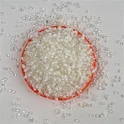
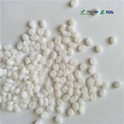
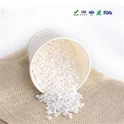
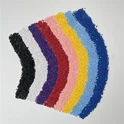
t is not a final product itself, but a core functional masterbatch that, when added proportionally during plastic product manufacturing, conveniently provides plastics with long-lasting antibacterial properties.
Core Mechanism of Action
The antibacterial effect of plastic antibacterial masterbatch is mainly achieved through the following two methods:
Mechanism of Action Examples of Main Antibacterial Components Mode of Action and Characteristics
Contact-type antibacterial Silver ions, zinc ions, copper ions The antibacterial agent remains stable on the plastic surface, destroying microbial cells through contact. Long-lasting effect, not easily lost.
Release-type antibacterial Certain organic antibacterial agents, quaternary ammonium salts The antibacterial agent is slowly released from the plastic into the environment. Fast-acting, but with relatively poorer durability.
Advantages of the "Masterbatch" Form: Compared to directly adding antibacterial powder to plastic, the masterbatch form ensures more uniform dispersion of the antibacterial agent in the plastic matrix, improving antibacterial efficiency, stability, and production cleanliness.
Main Application Areas and Product Examples
The application of antibacterial plastic masterbatch has permeated numerous fields closely related to health and hygiene:
Application Area Typical Products Main Effects and Significance
Food Packaging Cling film, storage containers, shopping bags Inhibits mold and bacteria, extends food shelf life, and reduces waste.
Household Appliances and Consumer Goods Refrigerator/washing machine liners, keyboards, mobile phone cases, toys Reduces bacterial growth on surfaces, lowers the risk of cross-infection, and improves hygiene.
Medical and Public Health Medical device casings, hospital furniture/building materials Creates a low-bacterial environment, which is particularly important for controlling hospital-acquired infections.
Fibers and Nonwovens Antibacterial fibers (used in socks, underwear), medical nonwovens Provides textiles with long-lasting antibacterial properties, improving comfort and hygiene.
Other Fields Automotive interiors (steering wheels), public facilities (handrails) Improves the hygiene of frequently touched parts.
Market and Industry:
Market Trends: The main driving force behind the growth of the global antimicrobial plastics market (with antimicrobial masterbatches being a key enabling technology) is the increased global health awareness, particularly in the packaging, medical, and consumer goods sectors.
Main Types: Based on the base resin, polypropylene and polyethylene are the most dominant categories.
Geographic Distribution: The Asia-Pacific region is the largest consumer market, and China is an important producer and growth market.
Summary
Antimicrobial plastic masterbatches efficiently, economically, and reliably impart antimicrobial properties to various plastic products by "pre-formulating" highly effective antimicrobial agents into an easily processable form.