I. Definition of Plastic Color Matching:
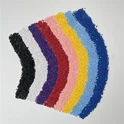
Definition: Color matching refers to creating colors that are pleasing, meet color difference requirements of color charts, satisfy customer expectations, are economical, and do not fade during processing and use, based on the three primary colors: red, yellow, and blue. Furthermore, plastic coloring can endow plastics with multiple functions, such as improving their lightfastness and weather resistance; giving them special properties such as conductivity, antistatic properties, and antibacterial properties; and different colored agricultural films can serve functions such as weed control, insect repellency, and seedling cultivation. In short, color matching can also achieve specific application requirements.
II. Colorants:
Pigments and Dyes
Pigment Characteristics: Pigments are colorants that are insoluble in common solvents. Therefore, to obtain ideal coloring performance, methods such as mechanical heating and mixing are needed to uniformly disperse the pigment in the plastic.
Pigment Classification: According to structure, pigments can be divided into organic pigments and inorganic pigments.
Inorganic Pigments:
Advantages: Good thermal stability, excellent weather resistance, excellent light stability, low price, and superior dispersion performance. Examples: titanium dioxide, carbon black, etc.
Titanium Dioxide Series: Mainly includes titanium dioxide, zinc oxide, and zinc barium white. Titanium dioxide has two structures: rutile and anatase. Rutile titanium dioxide has a high refractive index, high hiding power, stability, and good weather resistance. If titanium dioxide is not dispersed at the original factory, a large number of black spots will be generated during the color matching process, indicating that the dispersion is not open. Therefore, it needs to be dispersed with a dispersant before use. Some manufacturers' grades are processed before entering the market; such materials can be used directly. Primarily used to mask resin transmittance and increase whiteness.
Carbon black: A commonly used black pigment, inexpensive, it also provides UV protection (anti-aging) for plastics and conductivity. Different production processes yield various types of carbon black with a wide range of particle sizes and significantly different properties. Carbon black is classified by application into pigment carbon black and rubber reinforcing carbon black. Pigment carbon black is further classified by its coloring power into high-pigment, medium-pigment, and low-pigment carbon black. Carbon black particles are prone to aggregation; to improve its coloring power, dispersants must be added during processing to improve its dispersibility.
Disadvantages: Relatively poor coloring power, high relative density, requires larger addition amounts, and lacks vibrant color.
Main uses: To increase color concentration (generally applicable to various resins depending on color requirements), especially in engineering plastics where it exhibits excellent performance, such as PA, PC, PBT, POM, PPO, PPS, and other materials, as well as non-transparent and gray resins.
Organic pigments:
Advantages: High tinting strength, bright colors, complete color spectrum, low relative density, and low addition amount.