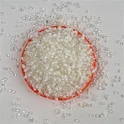
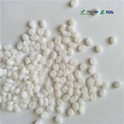
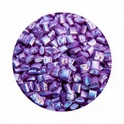
Performance Characteristics Comparison
Heat Resistance and Mechanical Strength
1. PA66 masterbatch exhibits significantly better heat resistance than PA6 masterbatch, with a higher melting point (PA66 approximately 260–270℃, PA6 approximately 210–220℃). It maintains better color stability and mechanical strength under high-temperature conditions, making it suitable for high-temperature applications such as engine parts. PA6 masterbatch, on the other hand, has better toughness and impact resistance, but a lower upper limit for long-term use temperature.
2. Hygroscopicity and Dimensional Stability
PA6 masterbatch is highly hygroscopic, making it susceptible to dimensional changes due to environmental humidity; moisture-proofing measures must be considered in the design. PA66 masterbatch has relatively lower hygroscopicity, but stronger intermolecular forces result in superior overall dimensional stability.
Processing Technology Differences
Processing Difficulty: PA6 masterbatch has good melt flowability and a wide processing temperature range, requiring less sophisticated equipment and suitable for conventional processes such as injection molding and extrusion. PA66 masterbatch has higher melt viscosity, requiring higher temperatures and pressures, and demanding stricter equipment precision and process control.
Molding Shrinkage: PA6 masterbatch has a higher shrinkage rate (approximately 1%–1.5%), requiring improvement through additives or composite processes; PA66 masterbatch has a lower shrinkage rate, but requires more precise gate design to avoid premature solidification.
Application Areas and Costs
1. Typical Application Scenarios
PA6 Masterbatch: Primarily used in areas with lower strength requirements, such as household goods, light automotive shells, and textile fibers.
PA66 Masterbatch: Concentrated in high-requirement scenarios, such as industrial machinery parts, automotive engine components, and high-end electronic casings.
2. Price Factors
PA66 masterbatch is typically 30%–50% more expensive than PA6 masterbatch due to the scarcity of its raw materials (such as adiponitrile) and the complexity of its processing. Costs must be weighed based on product performance requirements.