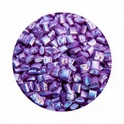
In the field of plastic processing and product manufacturing, "blocking," "high coefficient of friction," and "poor surface finish" have long been three major pain points for enterprises. Blown films are difficult to separate after winding, and injection-molded parts often stick during demolding. Slip masterbatch effectively improves processing efficiency and user experience, and is widely used in plastic products such as PE, PP, and PLA. This article will give you an in-depth understanding of the core functions and application areas of slip masterbatch.
I. Definition and Core Components of Slip Masterbatch
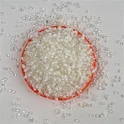
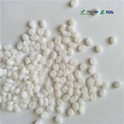
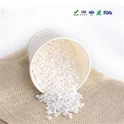
Slip masterbatch is a granular additive made by using resin as a carrier, highly concentrating and uniformly dispersing slip agents together with auxiliary components such as dispersants and antioxidants, through melt compounding, extrusion, and pelletizing. It can be directly added to plastic base materials without additional processing, simplifying the additive incorporation process while solving the problems of uneven dispersion and easy blooming associated with pure slip agents.
Its core components include:
Primary slip agents: These determine the slip performance of the masterbatch. Main types include amides (oleamide, erucamide, stearamide), silicone-based agents, and waxes (polyethylene wax, montan wax). Among them, amide slip agents are the most widely used on the market due to their high cost-performance ratio and significant effect.
Carrier resin: Serving as the "carrier" of the slip agent, it must have good compatibility with the target plastic substrate. Common carriers include polyethylene (PE), polypropylene (PP), and polyester (PET), and can be customized flexibly according to downstream applications.
Auxiliary components: Dispersants improve the uniform dispersion of slip agents in the carrier; antioxidants prevent thermo-oxidative degradation during processing; coupling agents enhance bonding with the base material and reduce the risk of blooming.
II. Core Functions of Slip Masterbatch
Reducing friction coefficients: The most essential function of slip masterbatch is to reduce both dynamic and static coefficients of friction on plastic surfaces. For example, in blown film production, PE films with slip masterbatch added do not block after winding, allowing smooth subsequent slitting and printing processes.
Improving demolding performance and reducing equipment wear: For injection molding and extrusion products, slip masterbatch reduces adhesion between the plastic melt and mold surfaces, making demolding easier and reducing the need for release agents. At the same time, it lowers friction resistance of the melt in processing equipment, reducing wear on screws and barrels and extending equipment service life.
Enhancing surface finish: Slip masterbatch forms a uniform lubricating layer on the product surface, improving gloss and smooth tactile feel.
III. Main Application Areas of Slip Masterbatch
Film industry: Blown films (PE cling film, shopping bag film), cast films (CPP/BOPP packaging films), and stretch films represent the largest application area, solving issues such as blocking after winding and poor printability.
Injection-molded products: Home appliance housings, automotive components, and daily-use items (tableware, toys), where it improves demolding efficiency and surface smoothness.
Pipes and profiles: PE water pipes and PVC profiles (doors, windows, fences), reducing friction between the melt and mold during extrusion and decreasing inner-wall roughness.
Food packaging: Food-contact-grade slip masterbatch (compliant with FDA and GB 4806 standards) can be used in food wrap and laminated films to ensure safety.
IV. Tips for Selecting Slip Masterbatch
Choosing the right slip masterbatch requires consideration of three key factors-base resin type, product application, and processing technology-while avoiding the misconception that "higher addition means better effect":
Match the base resin to ensure compatibility: Slip masterbatches with different carriers suit different plastics. PE-based masterbatches are suitable for PE and PP; PET-based masterbatches are suitable for PET fibers and films. PVC-specific slip masterbatches must consider compatibility with PVC heat stabilizers to avoid chemical reactions.
Select slip agent type based on product requirements:
High slip, low friction coefficient: Prefer erucamide masterbatch, which migrates slowly and provides long-lasting performance, suitable for thick films and durable products.
Fast-acting slip: Choose oleamide masterbatch, which migrates quickly and suits short-term slip needs of thin packaging films.
High-end appearance requirements: Choose silicone-based slip masterbatch, offering high gloss and low blooming risk, ideal for automotive and home appliance products.
Environmental and regulatory compliance: For food packaging, medical supplies, or children's toys, select slip masterbatch compliant with FDA, EU REACH, GB 4806, and other standards to avoid harmful substance migration.
Control dosage to balance performance and cost: Typical addition levels range from 0.2% to 2%, adjusted according to product thickness and processing conditions. Excessive addition may cause surface blooming or "white haze," affecting print adhesion; insufficient addition may fail to achieve the desired slip effect.
V. Common Misconceptions and Precautions
Misconception 1: Higher addition means better slip performance. Overdosing can cause slip agent blooming, surface whitening, and ink adhesion problems, while increasing production costs. Small-scale trials are recommended to determine the optimal dosage.
Misconception 2: Compatibility must be tested when used with antistatic or color masterbatches. Some antistatic agents may accelerate slip agent migration, leading to premature aging of products.
Storage considerations: Slip masterbatch should be stored in a dry, well-ventilated warehouse to prevent moisture absorption and caking, which can affect dispersion during processing. After opening, it should be promptly sealed to prevent additive volatilization.