Why Do Different Color Masterbatches Have Different Prices?
When sourcing color masterbatch, many buyers notice a clear price gap between different colors. Black and white may be relatively cost-effective, while bright, transparent, fluorescent, or special-effect colors are often more expensive. This variation is not random - it is driven by raw material cost, formulation complexity, processing requirements, and performance standards.
Pigment Cost Is the Primary Factor
The primary factor determining the price of color masterbatch is the cost of the pigment itself. Market prices vary significantly among different pigments. For example, carbon black commonly used in black masterbatch has stable supply and relatively low cost, while high-performance organic pigments (used for bright red masterbatch, blue masterbatch, and yellow masterbatch) are considerably more expensive. Special pigments such as fluorescent, pearlescent, and metallic-effect pigments often cost several times more than standard pigments.
Pigment Loading and Color Strength
Some colors require a higher pigment loading to achieve the desired shade and opacity. If a pigment has lower tint strength, more of it must be added to reach the same visual effect, which increases the cost per kilogram of masterbatch. High-coverage colors and opaque whites often require high addition levels, directly impacting price.
Dispersion Difficulty
Certain pigments are more difficult to disperse evenly in the carrier resin. Poorly dispersing pigments require additional processing steps, stronger dispersion aids, or more advanced compounding equipment. This increases production time and manufacturing cost. Colors that demand ultra-fine dispersion for surface appearance or thin-wall products are typically priced higher.
Heat and Light Stability Requirements
Applications with high processing temperatures or outdoor exposure require pigments with strong heat resistance and UV stability. These high-performance pigments are more expensive than standard grades. Masterbatch designed for automotive, cable, or outdoor products usually costs more because of these durability requirements.
Regulatory and Compliance Grades
If a color masterbatch must meet food-contact, medical, RoHS, REACH, or other regulatory standards, only compliant pigments and additives can be used. Certified raw materials and additional testing increase total cost. As a result, compliant color masterbatches are often priced above general-purpose grades.
Special Effects and Functional Additions
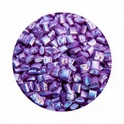
Effect colors - such as metallic, pearlescent, marble, transparent, laser-marking, or glow-in-the-dark - require special pigments or functional additives. These materials are costly and often used in more complex formulations, which raises the final masterbatch price.
Carrier Resin Differences
Not all masterbatches use the same carrier resin. Engineering carriers or specialty polymers cost more than standard PE or PP carriers. If the masterbatch must match ABS, PET, TPU, or other engineering plastics, the price will reflect that higher resin cost.
Custom Color Development Costs
Standard colors produced at scale are usually more economical. Custom color matching, however, involves lab work, multiple trials, and small-batch production. Development time and lower production volume typically lead to higher unit pricing.
Order Volume and Production Scale
Large production runs reduce unit cost through scale efficiency. Small orders, trial batches, or frequently changing colors increase setup and cleaning costs, which are reflected in pricing.
Final Takeaway
Color masterbatch pricing is influenced by more than just the visible color. Pigment type, loading level, dispersion difficulty, performance requirements, compliance standards, and customization all contribute to cost differences. For buyers, the most cost-effective choice is not always the lowest price per kilogram, but the masterbatch that delivers stable color, efficient processing, and consistent product quality.